An older woman and main look over plain language communication documents togther

Why use plain language in your communication?

Plain language is a win-win strategy that underpins trust, transparency and reach ‒ a simple technique you can’t afford to ignore.

Reading time: 5 mins | By Lee Ellwood

Organisations need people to engage with what they’re saying and act on it. But those same people are usually busy and attention-poor, so communication needs to be quick to access, easy to understand and simple to use. How do you achieve that?

Through plain language: a simple way to engage the audiences you need and inspire them to act. It's an on-call technique that builds trust, creates transparency and extends your reach — 3 things every organisation working for public or social benefit needs to achieve its goals.

Using plain language in business communication is a strategic decision, not a passing fad.

Writing always has a job to do

A scenario: your organisation has worked hard for months to create, launch and deliver a new impact program that’s made big changes for many people. It’s vital for the program’s continuation that stakeholders and funders get on board, so your team writes a report and sends it out.

But it’s been written in corporate-speak: passive voice, third person, sector jargon, complex sentences, long paragraphs. It’s dense and obscure. The stakeholders can’t skim it quickly, so it goes to the bottom of their priority pile. The funders don’t have time to decode it, so they send back a ‘no’.

The report has failed to do its job. You’ve missed your chance to secure another year’s sign-off and funding. All that hard work may as well not have been done.

What does ‘plain language’ mean?

Plain language is writing that lets the intended reader find, understand and use information the first time they read it. It’s functional, not stylistic. It makes your documents and information more accessible to more people.

We're talking about understandable language that means you don’t get phone calls asking for information that’s already on your website. And potential clients don’t give up on you because they don’t have time to unpack your messaging and work out what exactly it is that you do.

It is not ‘dumbing down’: dumbed-down is about what you say, while plain language is about how you say it. The Australian Government Style Manual nails it: ‘Plain language is an essential communication tool that supports comprehension, accessibility, trust and efficiency’.

So much benefit, one simple strategy.

Plain language builds trust

Trust, a known business differentiator, is about relationship: what people feel about your organisation. You can build trust by ensuring people have repeated, reliably positive experiences with you.

Plain language makes interacting with you efficient, easy and consistent ‒ a positive experience. Funders, program participants, clients, members and partners who are consistently able to understand what you're telling them are more likely to believe you, trust you and feel prepared to support you. They're more likely to renew their membership, read your newsletters or recommit financial support.

So you’re more likely to achieve your organisational goals.

Plain language is transparent

Transparency is structural: it’s an institutional openness about how you operate that can be checked and verified. By removing opaqueness and jargon from your communication, plain language supports transparency.

As an example, the Victorian state government recently launched an accessible communications policy that mandates plain language and accessibility for its internal and external communications. It applies not only to employees but also to contractors, consultants, IT suppliers, volunteers and anyone else ‘undertaking activity for or on behalf of’ the state government.

By setting clear benchmarks that are organisation-wide, a policy like this embodies transparency. If the government doesn’t meet its own proclaimed standards for communicating to the public, it’s going to show.

Plain language is reach

As any sociolinguist will tell you, jargon and opaque language function, intentionally or otherwise, as gatekeeping mechanisms. If someone understands the group lingo, they’re in; if they don’t, they’re out. Plain language removes that exclusivity and provides access to your writing, enabling it to reach more people.

Accessibility isn’t only about readers with low literacy, English as an additional language or disability. Barriers to access can be temporary rather than permanent, as IPEd’s newly updated accessibility guide, Books without barriers, explains. Think of the parent who's functioning on no sleep or juggling a baby while trying to complete an online form: they just want to do the thing quickly. And everyone's attention is divided between so many responsibilities in any given minute — so why make things harder than they need to be?

Plain language is inclusivity by design. It helps everyone do what they need to do. It costs the fully attentive reader nothing, and it's a genuine relief to everyone else.

Legal writing can be plain language

If there's one field where jargon and formality have always felt unavoidable, it's law. Our legal editor, Kylie Howard, has written about why plain language matters in legal documents for businesses, and how it’s possible to convey legal information without losing precision or protection. Read Kylie’s article here if you've ever assumed your content is too technical or too high-stakes for plain language.

After all, if legal writers can adapt to plain language, everyone can!

Why would you not?

Plain language is gaining ground as a communication standard. Government partners, funders, members and customers are increasingly expecting it, and Victoria's mandate is a sign of where standards are heading.

Here are some signs your communication isn’t as plain as you thought.

  • Readers regularly ask your staff to explain something a document already says.
  • Your reports are skimmed or ignored, not acted on.
  • Your funding applications come back requesting clarifications.
  • Meetings get bogged down in ‘robust discussions’ of what the papers are actually saying.

These gaps are less a writing fail than a strategy fail, because they’re costing you opportunities and efficiency.

So why would you not use plain language? It's the simplest strategy available for effective, trust-building communication, and it's right within reach.

If the benefits of using plain language sound good to you, get in touch ‒ we can set you on the road to clearer documents, fewer misunderstandings and better reader responses.

A blond white woman is reading a printed annual report. Writing a good annual report will help to get attention for your impactful work.

Writing a good annual report starts at the beginning

Annual report season doesn't have to be stressful. Thoughtful planning before you start will save you angst later – and produce a well-written annual report people actually read.

Reading time: 4 mins | By Lee Ellwood

With EOFY over, many government entities, NFPs and for-purpose organisations are now focusing on their annual reports. This is a once-a-year opportunity to show people what you’ve achieved – and to influence how they see you.

That’s why writing an annual report has a reputation for being stressful and panic-inducing. No one wants to mess up this key chance to be seen, understood, trusted and funded. And the bigger the organisation, the more complex the report project.

Whether you’re in charge of a corporate annual report or a non-profit one, it’s a key opportunity to make your impact visible. Here are some tips for sidestepping annual report problems from the outset.

Know what you need to achieve

Before you get into the writing or design, get clear on your purpose and audience. Funders and board members, ratepayers or constituents, strategic partners and the public all want different things from the same document. When you know who you're writing for, you can shape the report to reach them.

Also, confirm what needs to be included in an annual report for your organisation. Requirements vary depending on organisation type: charity, company, council or government entity. If you're not sure, check with your governance or compliance officer before you start writing.

Then separate your essential content from your narrative content, so you’re clear on what you have to work with. It’s the story-driven content that makes your report worth reading, while the compliance sections for an annual report – governance, financials and performance – back it up.

Look and learn

Before you start work, revisit last year's annual report. Reviewing what worked, what didn't, and what feedback came in can give you lots of ideas for improvement. Comments from your board, executive team, partners and the public will give you different perspectives to consider.

Also, check out what other organisations are doing well in their annual reports. (If you’re not sure where to find good annual report examples from leading companies, search for sector and industry association awards lists – they’re online and all over socials.)

  • Do plain language and clear headings make reading and comprehension quick and easy?
  • What central narratives or themes run through them?
  • Are the designs spacious and clean, or cluttered and dense?
  • What’s your first impression of each report? Why?

Work out a realistic timeline

Most annual report stress comes from underestimating everything that isn’t writing. For a low-stress annual report, we suggest:

  • working backwards from the launch or tabling date to determine your project start date
  • including time for design, photography, stakeholder sign-off and printing
  • adding another 4 weeks, to cover contingencies
  • chasing case studies, quotes and permissions earlier than you think you need to
  • confirming up front who approves what and in what order.

Communicate your schedule to all stakeholders clearly and firmly – book time in their diaries for their reviews or contributions, if you need to. Vague emails saying ‘I need this in 2 weeks’ are too easy for busy people to overlook.

Government and council reports need very detailed scheduling, because they have fixed tabling or presentation deadlines and strict requirements. If this is you, check out the Australian Government Style Manual’s Reports page for helpful links and advice.

Choose your format(s) early

Print, PDF, web or a combination? Your annual report’s format (or formats) will affect its word count, structure and design schedule. And retrofitting content to a different format instead of designing for it up front will raise both your stress levels and the cost of your annual report.

If you're a government or council writer, accessibility and web content standards will apply to your report. These requirements can influence format decisions, so they’re better factored in now than later.

Find your story before you write it

During this planning phase, identify a narrative theme for the report. This is the story that will run through the whole document, giving your reader a reason to keep going and to care about your work. The narrative is carried as much by case studies, quotes and images as by your statistics and graphs – often, more.

Whether you deliver infrastructure or social change, every organisation has a story, and that narrative is important for reader engagement. The trick is to identify it before you start writing, not halfway through.

Give your report its best chance

This isn’t about perfectionism. Getting your annual report ‘right’ is strategic. It gets this high-profile document read and understood, allowing it to achieve its purpose: showing the world the impact you’re making.

One last tip for reducing annual report stress: consider outsourcing at least some of the work to an external editor. When you have an expert to worry about the language level, cohesion and clear narrative, you’ll be free to manage the project (and those darn stakeholders).

In our next post, we’ll tackle the classic annual report challenge: how to manage multiple contributors and stakeholders while staying sane.


Image credit: Goodluz on Depositphoto, by licence

Woman with blond hair at a desk, using clear writing for impact while writing in a notebook and on her laptop.

Without clear writing, your impact is invisible

Great work hidden behind average writing stays invisible. Discover why clear writing for impact is essential, not optional.

Reading time 3 mins | By Lee Ellwood

Why is clear writing vital for purpose-led organisations? Surely the life-changing work you’re doing is more important than the reporting and documenting you only do because you have to.

Well, yes, and no. Impact work needs funding, awareness, engagement and support to be able to continue, and that requires writing. This is important because it’s only through your writing that funders, policy makers, awards judges and the general public meet your work. Unless they’re participants in your projects, they'll only ever meet what’s written about it.

If your writing is clear, succinct, audience-focused and outcomes-centred, those so-important readers can easily visualise your impact, and they'll be more likely to buy in to your activity. But if your writing is unclear, dense, organisation-focused or compliance-based, the good work that you’re describing will effectively be invisible.

This is the central problem that good writing solves: how to get your work seen – and felt. Clear writing for impact makes for-purpose work visible, which opens doors to funding, support and recognition.

The visibility gap

The space between what you do and what people see of it is your ‘visibility gap’. For non-profits and purpose-led people, writing is often an under-appreciated secret weapon for closing that gap.

  • If you’ve received funding for a program, you must report against that program to account for your funding. But don’t write an audit: tell your impact story.
  • If your research could change lives by shaping policy, you need to write policy submissions. But don’t write dense-and-dry: make it easy for the policy maker to extract the value.
  • If your service supports people in difficulty, you have to write on your website how you do it, including your terms and conditions. But don’t write complex legalese: make it easy for people to see straight away that you can help them.

Impact reporting, content writing, legal and policy writing and research writing are all forms that for-purpose organisations need to use. They may sound different, but they share a key common feature: if your writing doesn’t serve your reader’s needs, the work behind them will remain invisible.

How is your writing hiding your work?

Example #1: ineffective T&Cs

A new community service sets up, ready to support and protect vulnerable people. It implements a client agreement. But the terms and conditions are written by the service’s lawyer – in dense legal language, with cross-referencing, multi-level numbering and layers of conditional clauses.

Once work gets underway, the service staff find themselves wasting valuable time fielding the same questions over and over. Clients have no hope of understanding what they’re agreeing to, and they give up on accessing the help that’s available – because they can’t see it.

(Even though the client agreement is a legal-ish document, plain language would help clients see this service clearly.)

Example #2: the annual non-report

A non-for-profit has achieved amazing change for its client community – helping migrant women re-enter the workforce in meaningful employment. Its annual report project is allocated to an overworked, under-resourced program manager, who cuts and pastes from colleagues’ emails into a template. The result is an uneven report full of sector jargon, tables of outputs and varying voices, with no unifying central message and an incohesive structure.

The funding organisation can’t see clearly what’s actually been achieved with their money, and they start to doubt their investment.

(Understanding how good business writing sets you apart would turn this annual report from difficult to dynamic.)

Compliance vs storytelling

It’s actually not an either/or situation. Your writing can be both clear and detailed, engaging and accurate, factual and narrative.

Plain language for non-profits in Australian doesn’t mean watering down the substance of your writing. Funders want the figures, policy makers need the evidence, and clients and supporters wonder what it is you do. So present the facts, but weave them into a story: the story of your achievements.

Invest a little time in producing writing that makes your hard work visible. For example:

  • Structure your document so your reader can follow your narrative, skim if necessary, and act quickly.
  • Learn plain language principles and apply them: active voice, everyday words, few (if any) acronyms.
  • Tell the story of your work, rather than stating facts and figures.
  • Talk about outcomes, not outputs.

Clear writing for impact is part of the work

When we talk about ‘good writing’, we don’t mean ‘nice-sounding words’. We’re talking about effective writing: documents and reports that achieve what you want them to. For non-profit work, that means making your real work visible to the people who can support it, rely on it, fund it or recognise it.

That’s why we believe that writing for impact isn’t separate from the work itself: it’s the door through which people who matter can meet work that matters.

Is your writing opening – or closing – doors to your impact work?


How do you write impact reports well? A dark-haired man in white, button-through shirt man sits at an office desk with a laptop and documents. His head is buried in his hands as though he doesn't know where to start..

How to write impact reports that people actually read – and act on

They're your organisation's chance to make an impact on your readers, in more ways than one. Find out how to write impact reports well and how you can leverage them for full value.

Reading time: 4 minutes | By Lee Ellwood

Do you see impact reports as little-read compliance documents, something you have to produce to meet legislation or funding requirements? Think again: they can also be an important tactic in your communications strategy.

That's why it's worth knowing how to write an impact report that people notice – and why a clear, confident, inspiring report can be one of the hardest-working documents your organisation produces.

So if you've been googling 'how to write impact reports' or 'what should be included in an impact report' only to be overwhelmed by AI suggestions, ugly templates and corporate jargon, this article’s for you. We'll walk you through the essentials and show you what separates an ‘okay’ impact report from a truly impactful one.


Why do impact reports matter?

Impact reports for social impact organisations can have more value than you expect. They may be program-specific, accounting for progress and expenditure. They may be annual reports, dictated by legislation or governance obligations. But whatever their purpose, you can use impact reporting to do so much more than be accountable.

A well-written impact report:

  • establishes trust with funders, donors, partners and the communities you serve
  • attracts funding by demonstrating you know what you're doing
  • builds your credibility as an evidence-led voice in your sector
  • yields content you can repurpose across your website, grant applications and social media
  • celebrates your team and volunteers, reminding them that their work is making a difference.

A good example is an annual philanthropic report, generated by donation-driven organisations. It’s an accountability tool, but also a PR exercise – aimed at inspiring more donors and continued donations.


What should be included in an impact report?

Whether you're new to the task or refreshing your current approach, every compelling impact report should cover these essential points.

  • 1. Context: you and your mission. Briefly orient readers: who are you, who do you serve and what are you trying to change? Don't assume people already know.
  • 2. Approach: your theory of change. What activities do you deliver, and what outcomes do you expect them to produce? This is the basis of your whole report.
  • 3. Method: your data and evidence. It’s impossible to report on social outcomes without measuring their impact. Be ready to substantiate your statements with solid evidence.
  • 4. Connection: your stories. Data tells readers what happened; stories tell them why it matters. Case studies, client quotes and practitioner reflections bring your numbers to life.
  • 5. Reflection: your learnings. The best impact reports are honest about what worked, what didn't and what you've changed as a result. Transparency earns respect.
  • 6. Projection: your forward look. Where are you headed? What are your priorities for the next year or funding cycle?

Those are the main elements of an impact report. There may be other sections you’re required, or want, to include. But keep them relevant; don’t add sections just to make the report seem more substantial.


The challenges in writing impact reports

These reports are important, complex, deadline-driven and high-profile. (Ha. What could possibly go wrong?) Here are some of the difficulties we’ve seen.

  • The data challenge: outputs, not outcomes. Many organisations collect data in systems that weren’t designed with storytelling in mind. Come reporting time, your evidence is lacking or talks about outputs (how many activities were delivered) rather than outcomes (how people's lives changed). Measuring impact needs to be built in from the start.
  • The stakeholder challenge: multiple voices. Even small social impact organisations will have multiple people contributing to or signing off on their reporting (or wanting to). The result can be an inconsistent and unclear document. Your impact report needs to display one voice and one mission: the organisation’s.
  • The jargon challenge: excluded readers. Social impact work is full of specialised terms and acronyms that mean nothing to people outside it: ‘theory of change’, ‘SDG alignment’, ‘logic models’, ESG, SROI … Good impact report writing translates this jargon into plain language that everyone can engage with.
  • The structure challenge: unclear story. A report with all the right content but an illogical order – with no narrative thread – will lose readers fast, because it’s too hard for them to know what’s going on. Structure and flow are just as important as substance.
  • The time challenge: maxed-out teams. Impact reports take a lot of work. When reporting falls to a program manager or administrator who’s already working at capacity or doesn’t have a communications skillset, the results can’t be optimal.

A step-by-step guide to drafting an impact report

From blank page to polished document, here's how to write impact reports that people will actually read and act on.

Step 1: Know your audience

Who will actually read this, and why: funders? Community members? Government? The board? Plan your report with your main audience – and their needs – front of mind.

Step 2: Gather your data early

Pull together your quantitative data (numbers, percentages, reach figures) and your qualitative evidence (surveys, case studies, interviews) before you start writing.

Step 3: Decide your narrative

Before you start drafting, identify the theme or achievement that will tie your impact report together. What's the central story of this reporting period?

Step 4: Structure before you write

Create a simple outline based on the essential elements listed above. Draft sections in bullet points first, then write prose. AI can be helpful here, if you know how to prompt it well.

Step 5: Write clearly and humanly

Use plain language, active voice and real stories. Write in varied sentence lengths but nothing over about 25 words. Cover one idea per paragraph.

Step 6: Check your claims

Check everything: every statistic, outcome claim and attribution should be accurate and verifiable. Don’t trust AI to get its facts right: always have a human be the last layer of quality.

Step 7: Edit ruthlessly

Cut out waffle, tighten the language, and make sure every sentence earns its place. Then get someone else – a knowledgable colleague or, better, a professional editor – to read it critically.


Consider getting expert help

Your organisation is doing amazing work. Your impact report should say so, loud and clear. Knowing how to write impact reports well is vital for your cause, and knowing where to get help with them is strategic.

But, let's be real: maybe writing isn't your strongest suit, or time just isn’t available. Maybe you recognise the value in having your report objectively reviewed before it goes out.

Editors and writing consultants can do this. We can help with impact reporting at every stage: from structuring the report and stengthening its narrative to editing your drafts, blending multiple voices into one and giving the final document a thorough, professional polish.


Even if outside help is not an option right now, the tips in this article should help your impact reports serve your organisation to the maximum. Once you recognise just how valuable they really can be, you can start to rethink your approach.


Photo by Lev Dolgachov, Depositphoto, by licence

The Ellwords team in a meeting around a timber table. From left to right, Kylie Howard, Lee Ellwood, Sally Eadie and Penny Hayes.

Small team, big difference: how freelance collectives benefit your communication

When you’re outsourcing writing and editing, hiring a group-structured freelance collective can be a particularly smart choice.

Reading time: 2 minutes | By Lee Ellwood


Outsourcing the editing and writing tasks in your communications plan is smart and efficient. When deciding which freelancer to book, consider the advantages of a collective or group operation.

Many communications freelancers offer their services in a formal or informal partnership with colleagues who have complementary skills. This is a huge plus for overloaded people in communications, marketing, PR, research and reporting roles.

Why? Because collectives and groups bring you maximum availability, diverse technical skills, extra flexibility and optimum reliability—everything you need to support your upcoming campaign or deadline with good, effective writing.

The benefits of freelance collectives

  • Our group structure brings together writers and editors with different backgrounds, experiences and specialised skill sets.
    This means extra creativity, broader perspectives and more valuable input, leaving your content richer, higher quality and appropriately voiced for your sector.
  • Working as a group maximises our availability, so your project is more likely to get a ‘yes!’ from us.
    The ability to co-work simultaneously (using collaboration tools like OneDrive and Teams) often means we can meet tight deadlines.
  • Your project is less likely to encounter delays due to illness, leave or workload bottlenecks, because our group always has a back-up writer or editor.
    If one editor or writer is called away unexpectedly, another can pick up the work, supported by our internal collaboration processes such as Teams and Asana.
  • Having multiple sets of eyes on board means your written communication receives even more thorough editing, proofreading and fact-checking.
    At EllWords, for example, we cross-review each other’s work to catch errors and inconsistencies and ensure high quality writing for our clients.
  • Working collectively allows for brainstorming, creative problem-solving and sharing of specialist skills and industry knowledge.
    We can draw on our whole group membership to flexibly and creatively meet your communication needs.
  • As a group with an established cross-sector network, we can readily scale up or down to suit your requirements for any particular project.
    The combination of all our separate professional networks means you have access to a very wide resource base.
  • Being a collective service means that more complex projects can be shared to leverage members’ individual strengths.
    We can allocate different stages of your project to the best editor or writer for that type of task (think: research, evaluation, fact-checking, copywriting or editing). As well as delivering quality output, this keeps projects on the move and minimises bottlenecks in peak periods.

EllWords—your freelance collective

Choosing a collective gets you a higher and more reliable level of service with more expertise, broader availability, collaborative quality control, strong and diverse networks, and the flexibility to meet a wide range of communications needs.

EllWords is a case in point. Everyone in our group is an established solo freelance editor and/or writer, but pooling our skill sets, professional backgrounds, creative perspectives and availability translates into successful outcomes for our clients. Back that up with our commitment to your communication goals, and it’s a sure-fire recipe for success.

Get in touch today to find out how the EllWords ‘good writing’ group can support your communication, stress-free.

An editor is working with a laptop and notebook. She has long red hair and wears a dark shirt.

Why you need an editor in your toolkit

Even comms professionals can benefit from calling in an editor. Find out how professional editing can boost your organisation's image, brand and engagement.

Reading time: 4 minutes | By Lee Ellwood | Copyedited by Kylie Howard


Talking about what editors do can be fun. (No, really. Hear us out.)

Over glasses of wine and cups of coffee, we’ve heard everything from 'finding typos' and ‘putting commas in’ to ‘checking facts’ and ‘taking over my writing’. Upon hearing the phrase ‘I’m an editor’, people visualise either glamour (wine at a book launch) or pedantry (red pens and stern faces). We can always tell which one it is by their expression: awe or revulsion.

So, lean in, as they say: here’s the secret.

You need an editor to ensure your words work hard

Editing is about clarity, consistency, engagement, story. It makes sure your words fulfil their purpose. And you need an editor because editing is vital for your communication strategy to succeed. Why?

  • If people don’t get your point immediately, they’ll go read something else. What’s the point of writing something if it doesn’t stand out from the sludge?
  • If people look but don’t engage, they won’t keep reading. How can your writing achieve its purpose if no one reads it?

Here’s the lowdown on what editing can do for you, your writing and your communication strategy.

Editing supports your brand messaging

Editing makes sure all your organisation’s written communication aligns with your brand. We check that your report, web article, capability statement or other document has a consistent voice, language level and tone so it sounds like your organisation. If not, we fix it.

Branding gives your audience a shortcut to knowing your organisation. If your writing contradicts your brand messaging, you’ll confuse your target market and struggle to engage them.

Achieving consistency is particularly important when multiple people contribute to your documents and publications (think annual reports and external newsletters).

You’ve put time and money into your brand. Why undermine it with inconsistent writing?

Editing boosts your credibility and expertise

You know your field, and your writing should show it. An editor will pick up any waffle, contradiction and uncertain expressions in your communications so that your expertise and reliability can shine through.

Getting your facts right also helps to build trust in your brand, and an editor can have your back here.

As standard process, we check basic facts like the spelling of people and place names, and we watch for flaws in logic. Other, more detailed fact checking needs to be stipulated in the project brief – and factored into your budget.

Editing shows you know your audience

Unless your target audience feels seen and heard, you won’t engage them. Your editor can make sure your writing has them front and centre: people-focused, problem-solving and relatable.

We also review documents for inclusivity and sensitivity, so your writing displays your organisation’s empathy, understanding, respect and values. Our accessibility checks and suggestions help your words reach more people, more easily. We consider the language level and whether it's appropriate for the audience.

What kind of editing do you need?

We’re back at that party, explaining what we do and why people need an editor.

Editing can be light-touch or deep intervention, depending largely on your purpose, your budget and your timeframe. But to give you an idea, let’s briefly outline the 3 most recognised categories of editing.

Structural editing: for engagement and accessibility

This is a ‘bigger-picture’ approach that allows your reader to find their way around your document in an enjoyable, user-friendly way, making it more attractive and engaging.

Your editor will review the document’s cohesion, flow and navigation. We’ll look at the balance between the sections and the overall pace of the piece. Is its length suitable for purpose, and is its focus even?

  • This level is equally effective on shorter texts (like brochures, newsletters and feature articles) or full-length documents (such as reports, capability statements and white papers).
  • It's also key for developing effective, engaging web content.

Copyediting: for distraction-free text

This is a detailed review of the language, form and grammar in the document. It should be done after a structural edit.

Our copyeditor will find and correct typographical errors, lapses in appropriate grammar or word usage, spelling mistakes, text misalignment, errors in number format or punctuation, general factual inaccuracies and style inconsistencies.

‘Line editing’ is similar to copyediting, and in Australia many copyeditors undertake both when they work. In fact, the two terms are often used interchangeably here, but they’re considered separately in the UK.

  • Line editing works at sentence and paragraph level and looks at word order, sentence structure, tense and voice.
  • Copyediting works at word level and covers errors and inconsistencies in spelling, punctuation, factual accuracy, styling, spacing and layout.

Proofreading: the last chance for perfection

This is a quality control step: the very last check of documents, manuscripts, web content or page proofs prior to their publication or distribution.

Depending on the type of document, your proofreader might check the page layout, order and numbering of pages, sections and chapters. We review the positioning of graphical elements, consistency of heading levels and other formatting, and make sure links and navigation are functional. We also make sure that earlier edits have been accurately taken in.

  • A tip: proofreading is not copyediting! Proofreading is a quality control step. Copyediting is the polishing step.
  • If your writing has not yet been professionally edited, ask for a ‘copyedit’ rather than a ‘proofread’. Or, avoid the terminology altogether and tell your editor exactly what you want them to look for.

Working with EllWords' editors

When the EllWords group works with you, we’ll find out your writing project's purpose, budget and audience. We’ll listen to the ideas in your mind and the vision in your head. We’ll ask what deadline you’re facing. Then we’ll find the best way to make it happen.

Our professional editing team can take the pressure off you, leaving you free to focus on leading, coordinating, planning and evaluating.

Why stretch yourself too thin when we can put time back in your hands? Contact us today.

An editor's hands are typing on a laptop, with a notebook, pen and coffee cup lying nearby.

5 reasons why ‘good writing’ matters

As professional writers and editors, we know that good writing matters to any purpose-led or socially focused organisation. But if you’re a time-poor, overloaded communications officer, you may not have had time to think much about it.

Reading time: 4.5 minutes | By Lee Ellwood | Edited by Penny Hayes


Why does ‘good writing’ matter, and what value does it offer your purpose-led organisation? What does 'good writing' actually mean?

In high school English class, it probably meant perfect grammar, vivid adjectives and beautifully crafted sentences. In business, those things can help create good writing, sure—but let’s dig deeper.

‘Good writing’ means effective writing

Anything written is written for a purpose. Whether it’s a novel, a shopping list, a business report or website copy, you always have a reason for writing it.

Good writing means effective writing: it achieves your purpose.

And effective writing maximises opportunities.

Everything you write for your organisation is an opportunity to get people on board with your purpose: to educate them, make them aware, inform them, update them, persuade them.

Effective writing allows you to make the most of those opportunities to engage your audience. It drives clarity, trust, engagement and results.

Those factors underpin the success of your communication strategy. You can have a brilliant strategy, but without effective writing, your tactics won’t carry it out.

Writing effectively takes time and skill, but it’s a worthwhile investment. Here’s why.

1. Good writing matters for efficiency

Good writing is clear—it ensures your message is quick to spot, easy to understand and confusion-free. Clarity is so important now because people are overwhelmed with information and skim content more than they read it. Clear writing makes it easy for them to get your point as they zoom past, thus increasing your chances they’ll stop and read more.

Clarity also reduces misunderstandings or mistakes that can cost your organisation time and money.

  • A poorly written webpage can increase your phone enquiries and take up more of your time.
  • Unclear procedures are inefficient, generating multiple revisions and more back-and-forth among your staff.

Here's a professional writing tip: follow plain English principles to maximise clarity. It reduces confusion for the reader and inefficiency for you. It also ensures your content is more widely accessible, which enhances your image as a relatable, client-focused and approachable organisation.

2. Good writing builds trust and credibility

For organisations trying to change people’s lives for the better, earning trust is vital. If people trust you, they’re more likely to come on board with you. Polished, professional and brand-aligned content signals credibility to your audience, and credibility builds trust.

You also need to convey expertise and reliability to succeed in influencing, persuading and engaging people. Good writing makes this possible.

  • Well-crafted storytelling allows you to share valuable insights and solutions.
  • Thoughtful writing can clearly and convincingly demonstrate a deep understanding of your chosen cause or issue.
  • Writing that is factually accurate, direct and honest will position you as committed, empathetic and authoritative in your sector.

But poor writing will undermine your expertise and credibility. If you can’t make your organisation sound interesting, committed and motivated, why should anyone listen to you?

3. Good writing connects and engages

Writing well makes people feel heard and understood. If you speak directly to your audience’s beliefs, circumstances and concerns, it creates connection, and that drives action.

  • Writing with empathy shows you care about your cause.
  • Acknowledging your audience’s pain points and offering valid solutions demonstrates that you know and understand them.
  • Writing inclusively tells people you respect diversity.

Let your writing show that you’re ‘on the same team’ as your audience, and it will help you build relationships and increase loyalty.

4. Good writing gets results

Ultimately, effective writing delivers the results you’re after. Whether you’re crafting web copy to convert visitors into participants or preparing a grant application to secure funding, the quality of your writing can make or break the outcome.

Why? Because writing is effective when it's focused on the purpose you want to achieve and the interests and needs of your target audience. Without taking those two things into account when you write, your message won’t engage the people you want to hook.

  • Writing a grant application? Write in a way that makes it easier for the assessors to see why your organisation deserves the funding.
  • Pulling together the annual report? Highlight what your stakeholders will most want to know about what you’ve achieved. Make it easy for them to find what they’re looking for and quickly grasp the key points.

Good writing adapts to suit the context, whether formal, technical or conversational, by tailoring its tone, style and language level appropriately.

Two people stand a metre apart texting each other. They both wear blue shirts and reading glasses. The girl's text message says 'Where are you?'. The boy's text message says 'I am here!'
Is effective communication really so hard?

5. Good writing attracts attention

It’s a ‘look at me’ world. Everyone is vying for attention and churning out content, which means much of it is poor quality—written fast and thrown into the void of the interwebs.

That’s why writing well can help you stand out.

  • High-quality content with well-expressed insights attracts readers. (Not everyone wants funny cat videos all the time.)
  • Quality writing also keeps readers engaged longer, which boosts metrics like time-on-page or click-through rates.
  • Search engines may reward well-written content with higher rankings in search results—a critical factor for driving organic traffic to websites.

It’s tempting to take the quick and easy route, thinking content quality doesn’t matter. But if your organisation invests in high-quality, professional writing for your content strategy, you position yourself ahead of other organisations that settle for mush.

Good writing matters to your organisation

Writing that's effective adds value to every communications tactic. From building people’s trust and confidence to saving you money and driving results, good writing matters because it's an essential tool for achieving your organisation’s goals. And it's so easy to achieve.

In our experience, many comms officers are under-resourced, on a deadline or stretched thin. If that’s you, consider outsourcing the writing. You’ll then be free to drive your strategy, lead your team, schedule your media and keep the bigger picture moving.


At EllWords, we specialise in effective writing for organisations making a difference, and we believe it can be transformational. We offer professional editing that makes your impact reports stand out and all kinds of writing to help you change the world.

If you’re ready to elevate your communications with clear, engaging words that deliver real benefits, let’s talk!

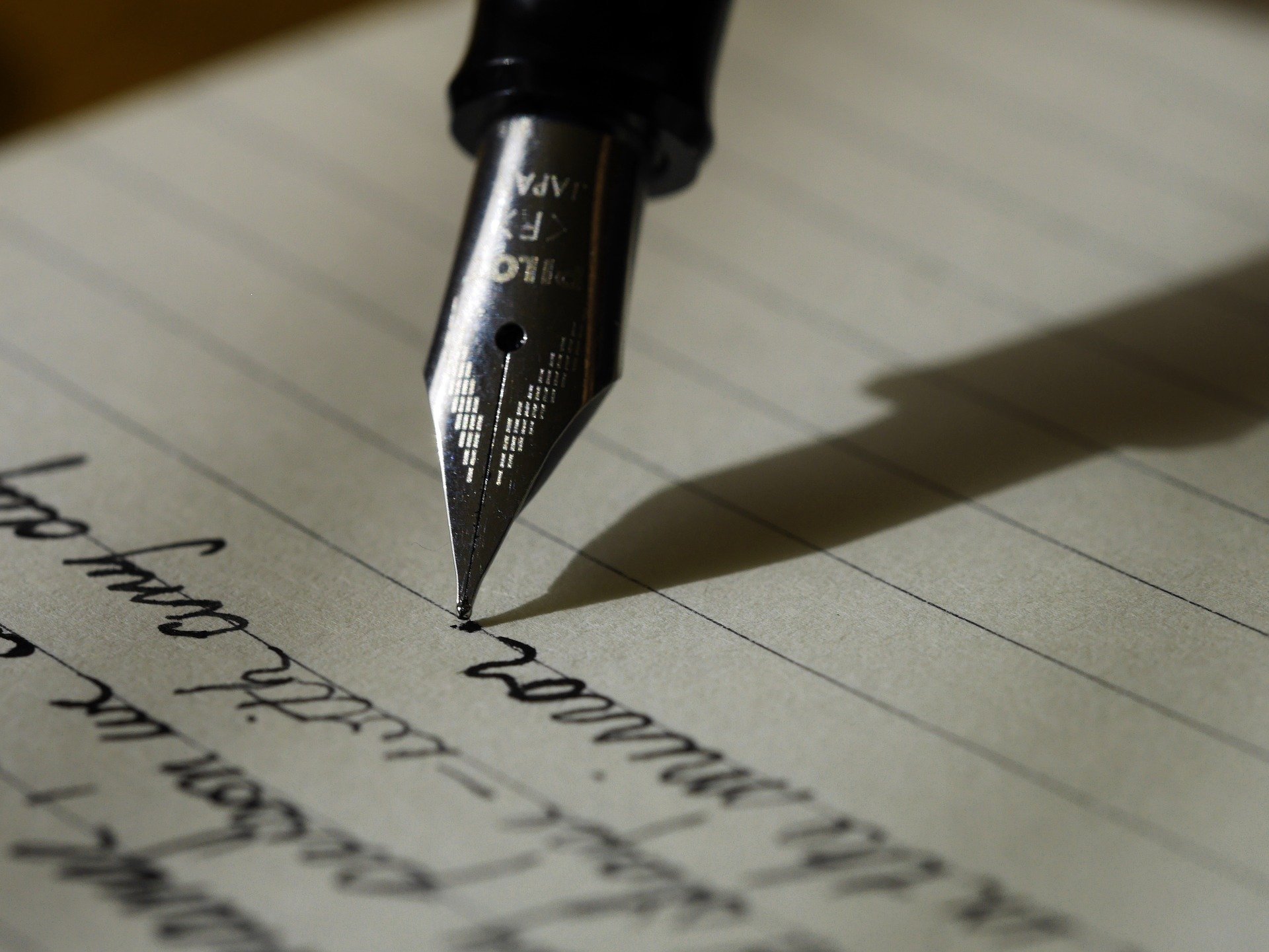
An ink pen writes in cursive script on a notebook page.

Why every organisation should have a style guide

An easy way to make your writing stand out is to ensure it's consistent in style. A style guide is a must-have communications asset.

Reading time: 1.5 minutes | By Lee Ellwood


Consistency across your written communication has important advantages. It demonstrates your organisation's professionalism, and it makes your communication more effective.

Inconsistency in spelling, word form, tense, abbreviations or any other aspect of a text interrupts and distracts your reader. It makes them stop for a split-second to think about what's wrong.

But you don't want them to be interrupted. You don't want your audience to be distracted from what you're saying. You want them to be totally engaged with what you're saying, and to stay engaged.

Inconsistency also detracts from a professional image. If you can't get your own writing looking schmick, how can potential customers or clients believe that your business actually IS schmick?

A style guide is the answer.

What's a style guide?

It's a simple Word or PDF document that records all the decisions you make about your organisation's preferred ways of styling your writing.

For example: the headings in this post use sentence case, which has a capital on the first word but not the others. That's currently the preferred convention in Australia, and it's our personal style preference, too. But for your business's communications, you might like to capitalise all the major words.

EllWords is an Australian business owner, so we use Australian spelling, style conventions and word usage. But if you deal with a lot of people in the USA, you'd adopt -ize and -or spellings instead of -ise and -our.

Our designer chosen this font ('Poppins') for our web text. You might prefer Arial or Calibri or Times New Roman or something else.

A style guide is the place to record all your preferences and decisions about styling text. You could also include your branding elements, too.

How to get a consistent style

Compiling a style guide is a service we offer as professional editors. The EllWords team will work with you to identify or choose all the style elements you'd like for your communications, then we'll compile them into one document. A searchable PDF with links between sections works well for most situations.

We could start with an existing, published Australian style guide, such as the Australian Government Style Manual, for the major style decisions. We'd then add any organisational preferences, such as word forms pertinent to your field of work.

Once your style guide is developed and in place, you'll have a permanent resource for all your employees to consult. You can also refer your freelance creatives to it when they work for you. Almost instantly, your written communication will begin to look consistent, cohesive and professional.

A personalised style sheet doesn't take much time or money to establish. But the impact on your professional image and your communication engagement will be long-lasting.

If you're interested in boosting your purpose-led organisation's professional look with a tailored style guide, contact us today.