How do you write impact reports well? A dark-haired man in white, button-through shirt man sits at an office desk with a laptop and documents. His head is buried in his hands as though he doesn't know where to start..

How to write impact reports that people actually read – and act on

They're your organisation's chance to make an impact on your readers, in more ways than one. Find out how to write impact reports well and how you can leverage them for full value.

Reading time: 4 minutes | By Lee Ellwood

Do you see impact reports as little-read compliance documents, something you have to produce to meet legislation or funding requirements? Think again: they can also be an important tactic in your communications strategy.

That's why it's worth knowing how to write an impact report that people notice – and why a clear, confident, inspiring report can be one of the hardest-working documents your organisation produces.

So if you've been googling 'how to write impact reports' or 'what should be included in an impact report' only to be overwhelmed by AI suggestions, ugly templates and corporate jargon, this article’s for you. We'll walk you through the essentials and show you what separates an ‘okay’ impact report from a truly impactful one.


Why do impact reports matter?

Impact reports for social impact organisations can have more value than you expect. They may be program-specific, accounting for progress and expenditure. They may be annual reports, dictated by legislation or governance obligations. But whatever their purpose, you can use impact reporting to do so much more than be accountable.

A well-written impact report:

  • establishes trust with funders, donors, partners and the communities you serve
  • attracts funding by demonstrating you know what you're doing
  • builds your credibility as an evidence-led voice in your sector
  • yields content you can repurpose across your website, grant applications and social media
  • celebrates your team and volunteers, reminding them that their work is making a difference.

A good example is an annual philanthropic report, generated by donation-driven organisations. It’s an accountability tool, but also a PR exercise – aimed at inspiring more donors and continued donations.


What should be included in an impact report?

Whether you're new to the task or refreshing your current approach, every compelling impact report should cover these essential points.

  • 1. Context: you and your mission. Briefly orient readers: who are you, who do you serve and what are you trying to change? Don't assume people already know.
  • 2. Approach: your theory of change. What activities do you deliver, and what outcomes do you expect them to produce? This is the basis of your whole report.
  • 3. Method: your data and evidence. It’s impossible to report on social outcomes without measuring their impact. Be ready to substantiate your statements with solid evidence.
  • 4. Connection: your stories. Data tells readers what happened; stories tell them why it matters. Case studies, client quotes and practitioner reflections bring your numbers to life.
  • 5. Reflection: your learnings. The best impact reports are honest about what worked, what didn't and what you've changed as a result. Transparency earns respect.
  • 6. Projection: your forward look. Where are you headed? What are your priorities for the next year or funding cycle?

Those are the main elements of an impact report. There may be other sections you’re required, or want, to include. But keep them relevant; don’t add sections just to make the report seem more substantial.


The challenges in writing impact reports

These reports are important, complex, deadline-driven and high-profile. (Ha. What could possibly go wrong?) Here are some of the difficulties we’ve seen.

  • The data challenge: outputs, not outcomes. Many organisations collect data in systems that weren’t designed with storytelling in mind. Come reporting time, your evidence is lacking or talks about outputs (how many activities were delivered) rather than outcomes (how people's lives changed). Measuring impact needs to be built in from the start.
  • The stakeholder challenge: multiple voices. Even small social impact organisations will have multiple people contributing to or signing off on their reporting (or wanting to). The result can be an inconsistent and unclear document. Your impact report needs to display one voice and one mission: the organisation’s.
  • The jargon challenge: excluded readers. Social impact work is full of specialised terms and acronyms that mean nothing to people outside it: ‘theory of change’, ‘SDG alignment’, ‘logic models’, ESG, SROI … Good impact report writing translates this jargon into plain language that everyone can engage with.
  • The structure challenge: unclear story. A report with all the right content but an illogical order – with no narrative thread – will lose readers fast, because it’s too hard for them to know what’s going on. Structure and flow are just as important as substance.
  • The time challenge: maxed-out teams. Impact reports take a lot of work. When reporting falls to a program manager or administrator who’s already working at capacity or doesn’t have a communications skillset, the results can’t be optimal.

A step-by-step guide to drafting an impact report

From blank page to polished document, here's how to write impact reports that people will actually read and act on.

Step 1: Know your audience

Who will actually read this, and why: funders? Community members? Government? The board? Plan your report with your main audience – and their needs – front of mind.

Step 2: Gather your data early

Pull together your quantitative data (numbers, percentages, reach figures) and your qualitative evidence (surveys, case studies, interviews) before you start writing.

Step 3: Decide your narrative

Before you start drafting, identify the theme or achievement that will tie your impact report together. What's the central story of this reporting period?

Step 4: Structure before you write

Create a simple outline based on the essential elements listed above. Draft sections in bullet points first, then write prose. AI can be helpful here, if you know how to prompt it well.

Step 5: Write clearly and humanly

Use plain language, active voice and real stories. Write in varied sentence lengths but nothing over about 25 words. Cover one idea per paragraph.

Step 6: Check your claims

Check everything: every statistic, outcome claim and attribution should be accurate and verifiable. Don’t trust AI to get its facts right: always have a human be the last layer of quality.

Step 7: Edit ruthlessly

Cut out waffle, tighten the language, and make sure every sentence earns its place. Then get someone else – a knowledgable colleague or, better, a professional editor – to read it critically.


Consider getting expert help

Your organisation is doing amazing work. Your impact report should say so, loud and clear. Knowing how to write impact reports well is vital for your cause, and knowing where to get help with them is strategic.

But, let's be real: maybe writing isn't your strongest suit, or time just isn’t available. Maybe you recognise the value in having your report objectively reviewed before it goes out.

Editors and writing consultants can do this. We can help with impact reporting at every stage: from structuring the report and stengthening its narrative to editing your drafts, blending multiple voices into one and giving the final document a thorough, professional polish.


Even if outside help is not an option right now, the tips in this article should help your impact reports serve your organisation to the maximum. Once you recognise just how valuable they really can be, you can start to rethink your approach.


Photo by Lev Dolgachov, Depositphoto, by licence

Legal writing: a female lawyer writing in plain language on a clipboard. She is young, Asian, and working at a desk in a law firm.

Legal writing and plain language

Legal writing can be both user-friendly and lawyerly, when it matters that its readers can understand and act on it. If you write official correspondence, terms and conditions, policies or procedures, plain language is now the standard.

Reading time: 3.5 minutes | By Kylie Howard

What do most people think of when they think of legal writing? Long, complicated sentences? Indecipherable words and Latin terms? Passive voice? Legalese? It can be enough to make eyes glaze over – especially for the non-lawyer (although even lawyers aren't immune to its sometimes-eyes-glazing-over effect).

The problem is that the more complicated and convoluted your writing, the more likely you are to alienate readers.

This could be because they don’t have a legal background or English might be their second language. But it could also be because they are time-poor professionals who need information quickly – information that is succinct and to the point.

Why does it matter?

Plain language in legal communication is important for many reasons. Here are just a few.

  • Readers are more likely to understand their rights and comply with their responsibilities.
  • Readers can more easily get access to justice and the services they need when they need them.
  • It helps build and maintain trust – when someone understands what you’re telling them, they’re more likely to trust you.

Take the common example of a fine. We’ve all received one. But how many times do they look complicated – if not scary? Small, barely readable font. Unnecessary detail. Hard-to-follow instructions.

Most of the time, what the reader needs to know is what they have to pay, by when, how, and what they need to do if they don’t agree with the fine. If these are set out following plain language principles, the reader is more likely to:

  • understand their rights and comply with their responsibilities
  • get access to justice they need
  • trust the organisation who issued the fine.

Plain legal writing isn’t dumb legal writing

Converting your legal writing into plain (or plainer) language doesn’t mean ‘dumbing it down’. On the contrary: you’ll usually make it more readable, more persuasive and more effective – without compromising legal accuracy. In other words, it will do what you want it to do.

Legal communication often buries the point. Plain legal writing makes the point sing.

When I was practising as a lawyer and instructing barristers in court, some of the most effective (and impressive!) written arguments I saw were short, to the point and clearly set out. They were written by senior, highly respected professionals who distilled complex concepts into plain legal language. And they did it to convince a judge.

Not so dumb.

Plain language is the standard

Still not convinced? In 2025, the International Standards Organization (ISO) published its first plain language standard for legal communication. The standard provides that legal communication should be ‘so clear’ that intended readers can easily find, understand and use the information they need.

Tips for better legal writing

  • Identify who you’re writing for. Knowing your audience is key for any good writing. The way you communicate to the general population is going to be different to the way you would write to a mainly professional audience or to a mainly legal audience.
  • Think about the way you’ve set out the information. Things like headings, lists and numbered steps make information easier to navigate. Diagrams, images and flowcharts can make sense of complicated processes.
  • Be careful with legalese and complicated expressions. Most of the time, there’ll be a simpler way to express the same thing without compromising accuracy or legal meaning. For example, instead of using phrases like ‘in regard to’ or ‘in relation to’, try ‘about’ or ‘for’. And, unless you’re communicating with a strictly legal audience, there’s usually no reason to throw Latin in.
    Sometimes, it can be hard to avoid legal ‘terms of art’, especially if it’s important to communicate or comply with the wording of legislation. If you do have to use these terms, try easy-to-navigate and -find glossaries and for online resources, use linked cross-references to definitions.
  • Use active not passive voice. Sometimes, particularly in legal contexts, the passive voice can’t (or shouldn’t) be avoided, but most of the time, it can. Switching to active voice will usually improve your writing and, most importantly, make it more useful to the reader. For example, instead of writing ‘care should be taken to’ try ‘take care to’ or ‘make sure you’.
  • Use short sentences. They’re easier to read and comprehend. They’re also usually more persuasive. Win-win.

Legal writing that hits the mark

By applying plain language principles to your legal writing, your legal communication will be accessible, impactful and useful to more readers – readers who will trust you and your organisation.

At EllWords, we understand that applying plain language principles to legal writing can be daunting and time-consuming. While we can’t give legal advice, we can convert complex legal communication into readable, engaging text without compromising accuracy.

We offer legal editing and writing for lawyers and non-lawyers: think policies, terms and conditions, law research, procedures and official correspondence.

Get in touch with us to ensure your legal writing makes an impact.

References / further reading

Plain English Foundation – It's finally here! An ISO plain language standard for legal writing

Victoria Law Foundation resources – Victoria Law Foundation plain language resources

ACT Parliamentary Counsel’s Office – Words and phrases guide: a guide to plain legal language

Clarity (an international organisation promoting plain legal language)

Butt P (2018) Legal usage: a modern style guide, Lexis Nexis, Australia

Two hands hold an open notebook with the word 'Philanthropy' written on it. Knowing how to write successful grant applications provides access to philanthropic funding.

How to write successful grant applications

Writing a winning grant proposal can seem like a dark and mysterious art. Find out how to boost your chances of success.  

Reading time: 3 minutes | By Lee Ellwood


Knowing how to write successful grant applications can enable you to make all kinds of change for good. Competitive grants are opportunities: they make it possible for you to achieve the seemingly impossible by financing your ideas and projects. So writing strong grant applications is a vital activity for social impact, research and purpose-led organisations – but not always an easy one.

Applications that fail often:

  • are unfocused, so they leave the assessors unclear about the proposed activity, and/or
  • don't align with the funder’s objectives, so they never had a strong chance anyway.

The problem is that winning grants is a competitive process with more applicants than opportunities, which guarantees that most applications won't succeed. The trick is to increase your application's chances of success.

So just how do you write a winning grant proposal? Read on.

What makes a good grant application?

Successful applications always align with the funding organisation’s goals and objectives. Organisations fund projects that progress their own aims – not yours – so your application needs to align completely. Applying for an opportunity just because it’s in your field of activity is likely to be a waste of everyone’s time. If you’re struggling to write something solid against every criterion, your project probably isn’t quite right for the grant.

Next, a good grant application tells a convincing, credible story of achievable change. You need to earn the funders’ trust, because you’re asking them to believe in you enough to invest in an as-yet unproven activity. Demonstrating your ability to deliver the project will build their confidence, both in you and in your project. Try following this structure when you write:

  • Problem: Identify the problem clearly, with evidence to support it.
  • Solution: Outline exactly what you propose to do about it.
  • Method: Explain how you’ll deliver on your promise, with a feasible, detailed project plan and budget.
  • Outcomes: Specify the practical outcomes and their benefits, and explain how you’ll measure success.

Strong applications are also concise, specific and detailed. The writing needs to be persuasive and inspiring, but also evidence-based – broad claims without substantiation are useless. Resist the urge to write filler ‘fluff’, and make sure every word earns its place.

What are some tips for successful grant applications?

  • Write as though the assessors know nothing about you, even if they do. They can only base their decision on what you submit in your application – not your reputation.
  • Prove the problem exists. Include numbers, data, surveys and quotes, and avoid general, sweeping claims.
  • Tie the problem to people, communities or society, not your enthusiasm for the project. Say who the problem is affecting and explain how the project’s outcome will change their lives.
  • Tell the project’s story. Even if the application form asks for information in a different order from problem – solution – method – outcomes, knowing your narrative will help you ‘sell’ your project effectively.
  • Use plain English: active voice, no industry jargon, and simply structured sentences. Assessors read lots of applications and their brains (and eyes) get tired, so make your proposal easy to understand and analyse quickly.
  • Break up your writing with subheadings, paragraphs and bullet points, if the application form allows it. Help those tired assessor’s eyes find your information easily.
  • Observe the word limits, because extra words are usually disregarded.

How can I improve my chances of successful grant applications?

Tell a convincing, well-evidenced story of potential and impactful change, and tell it completely and objectively. The 'objective' part is important, but can be hard to achieve. Because you're so close to your project, you might miss gaps in the application story that will leave the assessors confused or lacking a full picture.

When we write a grant application, we look for the gaps in the story, and we work on filling them. Being external, it's easier for us to dig out the details that demonstrate why your project should be recognised with a win. We ask you, ‘Why was that important?’ And ‘How many?’ And ‘So what?’ And ‘What happened as a result?’ (Annoying, but necessary.)

Then, as well as a strong grant application, you’ll also have a clear library of ideas, achievements and statements that you can repurpose in other written assets: capability statements, annual reports or industry submissions.

Switch your grants from ‘no’ to ‘go!’

To really boost your chances of getting a green light, we recommend outsourcing this work. Writing winning grant proposals requires time and objectivity, which you may not have in abundance. Every changemaking organisation works at full steam, and adding this kind of skilled, nuanced writing task to your team’s workload may be a recipe for a rejection. Rushed or poorly written applications just don’t win.

Hiring a professional grant writer will be an investment that can pay well – and take the pressure off your in-house team. The grant writer already knows how to write successful grant applications, and their time, skills and experience will powerfully complement your subject matter expertise. Let them look after the writing, so you and your team can focus on what you do best: developing and delivering projects that change lives.


At EllWords, we want to see change happen in the world. That’s why we offer grant writing as a service: to help purpose-led people make a real difference.

Visit our Award and grant applications page to find out more and request a quote for your next grant proposal.

A person is using lists in documents on their laptop. Transparent icons of lists appear over the hands and laptop in the photo.

Using lists in documents: how to help your writing, not hurt it

Knowing how to use lists well in documents can make all the difference to your writing's success.

Reading time: 4 minutes | By Lee Ellwood


There are lots of reasons for using lists in documents, but the secret is to use them well. A quick scribble will do fine for Christmas shopping, New Year’s resolutions and coffee orders, but for documents intended to make an impact, poorly constructed, formatted and located lists can set you right back.

Why lists matter in impact writing

Lists look pretty, the little text-breaker-uppers that they are. But here’s why you should pay attention to the way you’re using lists in documents. Sure, they give the eyes somewhere to rest on the page, but they do much more than that for your audience—and your communication success.

  • Readers are busy, so they skim text, and lists make your information scannable and easier to access.
  • Lists can foreground key information by making it stand out among a flood of words.
  • Lists can establish an order of steps to be followed or a hierarchy in the information to be absorbed.
  • Lists can highlight the relationships between pieces of information.

If you’re in impact reporting, research, opinion writing and content for social good, it’s vital that your writing engages your target audience every time. If the funding assessor or donor or program partner can’t quickly grasp what you’re trying to say, you could lose their attention in seconds.

In short, lists can make it easy for people to say ‘yes’ to your document.

(By the way, that list is a sentence list. Each item is a full sentence, so it takes an initial capital and a final full stop. It may or may not have an introduction in the preceding paragraph.)

What goes wrong with lists in documents?

We’ve seen a lot of lists over the years, and they haven’t all been effective. As a result of poor list construction, the information has been disjointed and hard to follow, or the chosen punctuation and list item structure has been distracting and confusing. The problem here is that readers disengage.

Some of the common issues with lists include:

  • list items with varying structures in the one list (distracting)
  • list items that are too long, or a mixture of lengths (confusing)
  • list items in an illogical order (disconnecting)
  • inconsistent list styling across the document (confusing and unprofessional)
  • overuse of punctuation (unclear and distracting)
  • overuse of lists (narrative-breaking).

Lots of list writers don’t ensure parallel structure of items in a list, and this causes problems in the document. ‘Parallel structure’ means that every item in the list follows the same syntactic pattern. Because humans like patterns, parallel structure helps readers extract your meaning more quickly and easily. For example, our list items are all noun phrases.

(As an aside, that list is a fragment list: each item is a piece of a sentence, not a complete one. Fragment lists have a lead-in sentence or phrase—‘Some of the common issues with lists include:’—and no punctuation after list items except the final one.)

How to write a good bullet list

The Australian Government Style Manual offers a clear, step-by-step to the principles of well-constructed and consistently formatted lists in documents. The guide covers capitalisation in lists, how to write a good bullet list, the differences between numbered and bulleted lists, and how to punctuate a list correctly.

Here are some of the key principles we follow at EllWords for using lists in a document.

  • Ensure parallel structure of items, so that all are consistent in tense, sentence type or word class within that list.
  • Minimise punctuation use and conjunctions—semicolons aren’t needed at the end of items, and you can skip the joining ‘and’, as well. (Except in legal contexts, where it really matters.)
  • Make sure the list serves a purpose and hasn’t been thrown in to break up the page. It should outline a genuine series of examples, options, key points or steps.
  • Apply numbering when the order of the items matters—as in a sequence of steps or instructions, for example. If the order doesn’t matter, use a bullet list.
  • Check that lists are scattered among paragraphs, not replacing them. A list should complement the way you present the more detailed information.

We recommend that writers don’t worry too much about the formatting details of their lists when they’re compiling their documents—just get the ideas and information flowing. Then, examine your lists closely during the editing and refining stage, when you can approach the text more critically.

One more list type …

  • A standalone list
  • Initial capital, like headings
  • No full stops—not sentences
  • E.g. shopping lists, brain dumps

Using lists in documents—for good

How does your list-writing shape up? The key thing is to be aware of the effect poor lists have on your document and the points (no pun intended!) to watch out for. Following our tips (and the AGSM) will have your lists performing for you in no time.

However, tidying up lists is one common aspect of our editing and writing work in impact reporting, research and legal writing, and long-form content. If you have a great document that’s almost ready to go and time’s running out, why not contact us for a final pre-distribution check and make sure your lists are carrying their weight?

Leading hand team mid 2025

Enhancing the service offer: how freelance writing and editing boosts creative design

Savvy creatives, like Leading Hand Design in Sydney, know the value of freelance writing and editing - and how best to make use of them.

Reading time: 2 minutes | By Lee Ellwood


Leading Hand Design, led by creative director Jamie Carroll and managing director Brett Osmond, is one of EllWords' major freelance editing and writing clients.

This vibrant agency has delivered innovative design solutions since 2000 for clients in the arts, architecture, local government, community legal, medical and health, social purpose and education sectors. Leading Hand is renowned for its creativity, strong client relationships and high-quality design solutions.

The Leading Hand team who use EllWords' freelance writing and editing: (left to right) Imogen, Luke, Sophia, Brett, Jamie, Jasmine and Jake. They are standing in a line against a wall, smiling for the camera.
The Leading Hand team, with managing director Brett Osmond (centre)

Having started with just one graphic designer, Leading Hand is now a full-service marketing and creative team, bridging design, technology and storytelling in exciting, innovative ways. Service offers included design, branding, strategy, digital, print, animation and motion graphics.

The challenge: an identified service gap

Then, in 2021, the agency began to consider the strategic value of being able to deliver professional copywriting and editing as well.

"We wanted to improve our client’s communication pieces and provide a professional, fast and reliable service to proof, edit and – in more and more cases – write copy,” Brett Osmond explains.

After 20 years in the publishing industry, Brett knew the value of quality writing and editing. The clarity, integrity, purpose and accuracy that professional editing and writing brings boosts a client's credibility, professional image and trustworthiness. But with the need being inconsistent, hiring a permanent editor and writer wasn’t practical.

The solution: freelance writing and editing

Brett Osmond, managing director of Leading Hand Design

Initially, EllWords provided only copyediting and proofreading. However, Leading Hand’s confidence in our services grew very quickly. We began receiving more requests for deeper editing, content writing and copywriting.

"Basically," Brett (pictured left) says, “I was super-pleased with the first few jobs we worked on together. It felt natural to direct more work to EllWords. It’s really been very organic and has grown and grown.”

The result: outstanding client solutions

Consequently, Leading Hand’s clients love the holistically high-quality outputs. They are impressed that their project’s written components receive as much attention and expertise as its visual design.

So what exactly has this successful partnership delivered?

  • High-quality content for the elder abuse resource, Compass.info
  • Lots of varied content and copy for FIRECOAT, the world’s most fire-retardant paint
  • Localisation of Australian copy to US English
  • Editorial input to the St Vincent’s Curran Foundation’s annual philanthropy report
  • Access to a select network of journalists and writers to meet peak demand
  • Editor–writer peer review and collaboration to ensure deadlines are met and work is high quality

Brett believes that the enduring partnership with EllWords has enabled Leading Hand’s continued growth. On our side, we’ve enjoyed supporting so many purpose-driven brands and organisations in their efforts to make a real difference.


Take the opportunity

At EllWords, we help purpose-led organisations write effectively for impact – from reports and analyses to storytelling, content and copy.

Everything you write is an opportunity to make an impact. Don’t waste your chance with ineffective writing: find out how we can tailor a ‘good writing’ solution that will help you change the world.

The Ellwords team in a meeting around a timber table. From left to right, Kylie Howard, Lee Ellwood, Sally Eadie and Penny Hayes.

Small team, big difference: how freelance collectives benefit your communication

When you’re outsourcing writing and editing, hiring a group-structured freelance collective can be a particularly smart choice.

Reading time: 2 minutes | By Lee Ellwood


Outsourcing the editing and writing tasks in your communications plan is smart and efficient. When deciding which freelancer to book, consider the advantages of a collective or group operation.

Many communications freelancers offer their services in a formal or informal partnership with colleagues who have complementary skills. This is a huge plus for overloaded people in communications, marketing, PR, research and reporting roles.

Why? Because collectives and groups bring you maximum availability, diverse technical skills, extra flexibility and optimum reliability—everything you need to support your upcoming campaign or deadline with good, effective writing.

The benefits of freelance collectives

  • Our group structure brings together writers and editors with different backgrounds, experiences and specialised skill sets.
    This means extra creativity, broader perspectives and more valuable input, leaving your content richer, higher quality and appropriately voiced for your sector.
  • Working as a group maximises our availability, so your project is more likely to get a ‘yes!’ from us.
    The ability to co-work simultaneously (using collaboration tools like OneDrive and Teams) often means we can meet tight deadlines.
  • Your project is less likely to encounter delays due to illness, leave or workload bottlenecks, because our group always has a back-up writer or editor.
    If one editor or writer is called away unexpectedly, another can pick up the work, supported by our internal collaboration processes such as Teams and Asana.
  • Having multiple sets of eyes on board means your written communication receives even more thorough editing, proofreading and fact-checking.
    At EllWords, for example, we cross-review each other’s work to catch errors and inconsistencies and ensure high quality writing for our clients.
  • Working collectively allows for brainstorming, creative problem-solving and sharing of specialist skills and industry knowledge.
    We can draw on our whole group membership to flexibly and creatively meet your communication needs.
  • As a group with an established cross-sector network, we can readily scale up or down to suit your requirements for any particular project.
    The combination of all our separate professional networks means you have access to a very wide resource base.
  • Being a collective service means that more complex projects can be shared to leverage members’ individual strengths.
    We can allocate different stages of your project to the best editor or writer for that type of task (think: research, evaluation, fact-checking, copywriting or editing). As well as delivering quality output, this keeps projects on the move and minimises bottlenecks in peak periods.

EllWords—your freelance collective

Choosing a collective gets you a higher and more reliable level of service with more expertise, broader availability, collaborative quality control, strong and diverse networks, and the flexibility to meet a wide range of communications needs.

EllWords is a case in point. Everyone in our group is an established solo freelance editor and/or writer, but pooling our skill sets, professional backgrounds, creative perspectives and availability translates into successful outcomes for our clients. Back that up with our commitment to your communication goals, and it’s a sure-fire recipe for success.

Get in touch today to find out how the EllWords ‘good writing’ group can support your communication, stress-free.

An editor's hands are typing on a laptop, with a notebook, pen and coffee cup lying nearby.

5 reasons why ‘good writing’ matters

As professional writers and editors, we know that good writing matters to any purpose-led or socially focused organisation. But if you’re a time-poor, overloaded communications officer, you may not have had time to think much about it.

Reading time: 4.5 minutes | By Lee Ellwood | Edited by Penny Hayes


Why does ‘good writing’ matter, and what value does it offer your purpose-led organisation? What does 'good writing' actually mean?

In high school English class, it probably meant perfect grammar, vivid adjectives and beautifully crafted sentences. In business, those things can help create good writing, sure—but let’s dig deeper.

‘Good writing’ means effective writing

Anything written is written for a purpose. Whether it’s a novel, a shopping list, a business report or website copy, you always have a reason for writing it.

Good writing means effective writing: it achieves your purpose.

And effective writing maximises opportunities.

Everything you write for your organisation is an opportunity to get people on board with your purpose: to educate them, make them aware, inform them, update them, persuade them.

Effective writing allows you to make the most of those opportunities to engage your audience. It drives clarity, trust, engagement and results.

Those factors underpin the success of your communication strategy. You can have a brilliant strategy, but without effective writing, your tactics won’t carry it out.

Writing effectively takes time and skill, but it’s a worthwhile investment. Here’s why.

1. Good writing matters for efficiency

Good writing is clear—it ensures your message is quick to spot, easy to understand and confusion-free. Clarity is so important now because people are overwhelmed with information and skim content more than they read it. Clear writing makes it easy for them to get your point as they zoom past, thus increasing your chances they’ll stop and read more.

Clarity also reduces misunderstandings or mistakes that can cost your organisation time and money.

  • A poorly written webpage can increase your phone enquiries and take up more of your time.
  • Unclear procedures are inefficient, generating multiple revisions and more back-and-forth among your staff.

Here's a professional writing tip: follow plain English principles to maximise clarity. It reduces confusion for the reader and inefficiency for you. It also ensures your content is more widely accessible, which enhances your image as a relatable, client-focused and approachable organisation.

2. Good writing builds trust and credibility

For organisations trying to change people’s lives for the better, earning trust is vital. If people trust you, they’re more likely to come on board with you. Polished, professional and brand-aligned content signals credibility to your audience, and credibility builds trust.

You also need to convey expertise and reliability to succeed in influencing, persuading and engaging people. Good writing makes this possible.

  • Well-crafted storytelling allows you to share valuable insights and solutions.
  • Thoughtful writing can clearly and convincingly demonstrate a deep understanding of your chosen cause or issue.
  • Writing that is factually accurate, direct and honest will position you as committed, empathetic and authoritative in your sector.

But poor writing will undermine your expertise and credibility. If you can’t make your organisation sound interesting, committed and motivated, why should anyone listen to you?

3. Good writing connects and engages

Writing well makes people feel heard and understood. If you speak directly to your audience’s beliefs, circumstances and concerns, it creates connection, and that drives action.

  • Writing with empathy shows you care about your cause.
  • Acknowledging your audience’s pain points and offering valid solutions demonstrates that you know and understand them.
  • Writing inclusively tells people you respect diversity.

Let your writing show that you’re ‘on the same team’ as your audience, and it will help you build relationships and increase loyalty.

4. Good writing gets results

Ultimately, effective writing delivers the results you’re after. Whether you’re crafting web copy to convert visitors into participants or preparing a grant application to secure funding, the quality of your writing can make or break the outcome.

Why? Because writing is effective when it's focused on the purpose you want to achieve and the interests and needs of your target audience. Without taking those two things into account when you write, your message won’t engage the people you want to hook.

  • Writing a grant application? Write in a way that makes it easier for the assessors to see why your organisation deserves the funding.
  • Pulling together the annual report? Highlight what your stakeholders will most want to know about what you’ve achieved. Make it easy for them to find what they’re looking for and quickly grasp the key points.

Good writing adapts to suit the context, whether formal, technical or conversational, by tailoring its tone, style and language level appropriately.

Two people stand a metre apart texting each other. They both wear blue shirts and reading glasses. The girl's text message says 'Where are you?'. The boy's text message says 'I am here!'
Is effective communication really so hard?

5. Good writing attracts attention

It’s a ‘look at me’ world. Everyone is vying for attention and churning out content, which means much of it is poor quality—written fast and thrown into the void of the interwebs.

That’s why writing well can help you stand out.

  • High-quality content with well-expressed insights attracts readers. (Not everyone wants funny cat videos all the time.)
  • Quality writing also keeps readers engaged longer, which boosts metrics like time-on-page or click-through rates.
  • Search engines may reward well-written content with higher rankings in search results—a critical factor for driving organic traffic to websites.

It’s tempting to take the quick and easy route, thinking content quality doesn’t matter. But if your organisation invests in high-quality, professional writing for your content strategy, you position yourself ahead of other organisations that settle for mush.

Good writing matters to your organisation

Writing that's effective adds value to every communications tactic. From building people’s trust and confidence to saving you money and driving results, good writing matters because it's an essential tool for achieving your organisation’s goals. And it's so easy to achieve.

In our experience, many comms officers are under-resourced, on a deadline or stretched thin. If that’s you, consider outsourcing the writing. You’ll then be free to drive your strategy, lead your team, schedule your media and keep the bigger picture moving.


At EllWords, we specialise in effective writing for organisations making a difference, and we believe it can be transformational. We offer professional editing that makes your impact reports stand out and all kinds of writing to help you change the world.

If you’re ready to elevate your communications with clear, engaging words that deliver real benefits, let’s talk!

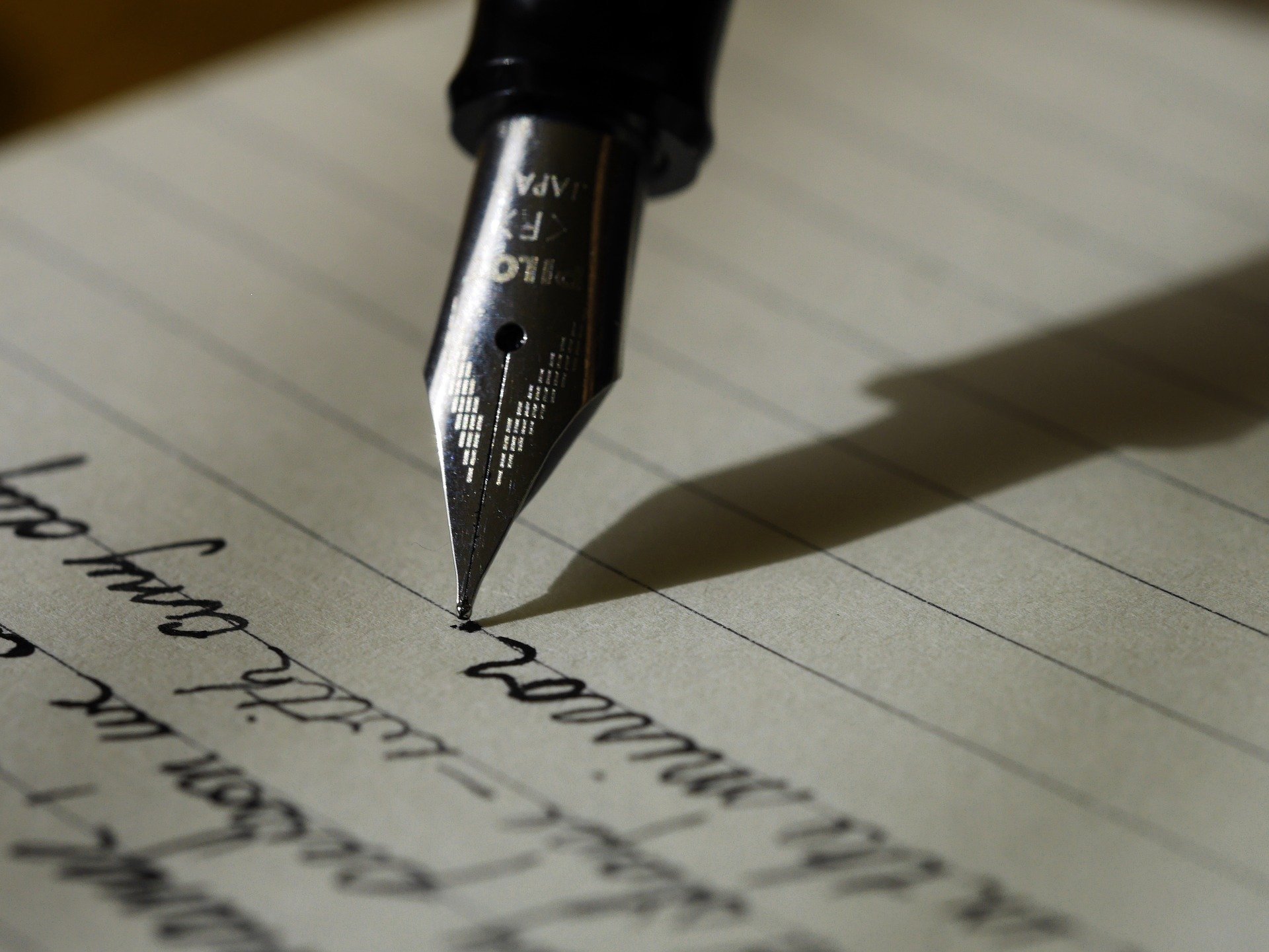
An ink pen writes in cursive script on a notebook page.

Why every organisation should have a style guide

An easy way to make your writing stand out is to ensure it's consistent in style. A style guide is a must-have communications asset.

Reading time: 1.5 minutes | By Lee Ellwood


Consistency across your written communication has important advantages. It demonstrates your organisation's professionalism, and it makes your communication more effective.

Inconsistency in spelling, word form, tense, abbreviations or any other aspect of a text interrupts and distracts your reader. It makes them stop for a split-second to think about what's wrong.

But you don't want them to be interrupted. You don't want your audience to be distracted from what you're saying. You want them to be totally engaged with what you're saying, and to stay engaged.

Inconsistency also detracts from a professional image. If you can't get your own writing looking schmick, how can potential customers or clients believe that your business actually IS schmick?

A style guide is the answer.

What's a style guide?

It's a simple Word or PDF document that records all the decisions you make about your organisation's preferred ways of styling your writing.

For example: the headings in this post use sentence case, which has a capital on the first word but not the others. That's currently the preferred convention in Australia, and it's our personal style preference, too. But for your business's communications, you might like to capitalise all the major words.

EllWords is an Australian business owner, so we use Australian spelling, style conventions and word usage. But if you deal with a lot of people in the USA, you'd adopt -ize and -or spellings instead of -ise and -our.

Our designer chosen this font ('Poppins') for our web text. You might prefer Arial or Calibri or Times New Roman or something else.

A style guide is the place to record all your preferences and decisions about styling text. You could also include your branding elements, too.

How to get a consistent style

Compiling a style guide is a service we offer as professional editors. The EllWords team will work with you to identify or choose all the style elements you'd like for your communications, then we'll compile them into one document. A searchable PDF with links between sections works well for most situations.

We could start with an existing, published Australian style guide, such as the Australian Government Style Manual, for the major style decisions. We'd then add any organisational preferences, such as word forms pertinent to your field of work.

Once your style guide is developed and in place, you'll have a permanent resource for all your employees to consult. You can also refer your freelance creatives to it when they work for you. Almost instantly, your written communication will begin to look consistent, cohesive and professional.

A personalised style sheet doesn't take much time or money to establish. But the impact on your professional image and your communication engagement will be long-lasting.

If you're interested in boosting your purpose-led organisation's professional look with a tailored style guide, contact us today.